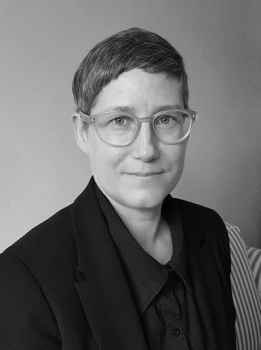
My PhD Dissertation The School between the Private and the Public – Educational Institutions and Social Justice (2024) examines questions of social justice in schools. In its four journal articles and an introductory chapter I introduce an institutional view in educational justice. I claim that we should not understand justice only as distribution or even as mutual recognition between individuals and groups, but when settling questions of educational justice we should consider the place and justified functions of schools as part of the just, basic structure of the society. For this end, I defend the school institution as a predominantly public social institution. I claim that as public social institutions that are committed to protecting children’s rights, the schools are in the best position to protect children’s justified educational interests.
In the narrow sense, it can be said that I defend the original ethos of the Finnish Comprehensive School (peruskoulu) that emphasizes providing good quality basic education equally for all children, regardless of their socio-economic background, and that grounds its ethical principles to the Convention on the Rights of the Child. This being said, it must be clarified that I speak of the the ethos as an ideal, and that I believe that it is unlikely that any school or school system have reached this aim yet. On the contrary, a body of empirical research shows that educational inequalities based on social class, mother-tongue, and ethnic origin is but growing in Finland. Thus, there is a lot to do institutionally and in practice for educational equality. This requires also theoretical work, because as I argue in my dissertation, current philosophical theories of justice are not well-equipped to deal with questions concerning minors and their education.
More widely, my wish – that is inspired by one of the classic philosophers of education, Israel Scheffler – is to further consider the nature of the school as a critical social institution. My current research interests thus concern autonomy in education in the broadest sense: as enhancing children’s own self-determination rights (of opinion, conscience, association, and culture), as the teachers’ professional, and the schools’ institutional autonomy. For instance, although I defend the school as a public social institution, I do not claim that its educational aims should be dictated by the state, but rather by what is educationally valuable and desirable.
In addition to my PhD research, I have studied questions of multiculturalism in educational theory, as well as digital university pedagogy and change in students’ epistemic beliefs.
Published research articles (peer reviewed):
Kannisto, T. (2023). Schools and the principle of non-intrusion to the private. Theory and Research in Education 21, 3. https://journals.sagepub.com/doi/10.1177/14778785231208057
Kannisto, T. (2022). Basic education as a collective good: In defence of the school as a public social institution. Journal of Philosophy of Education 56, 2. Pp. 305–317. https://doi.org/10.1111/1467-9752.12650
Kannisto, T; Loukola, O.; Hiltunen, J.; Omwami, P. (2020). Digitaalisuus tuli filosofiaan – Digitaaliset opetusvälineet ja ajattelun opettaminen yliopistossa. niin&näin 2/20. https://netn.fi/node/7581
Kannisto, T. (2019). Trans*kinship, children’s rights, and the school. International Journal of Educational Research. https://doi.org/10.1016/j.ijer.2019.01.003
Book chapter: Kannisto, T. (2019). What is ’multiculturalism’ in educational and political theory? In: Heikkinen, A., Pätäri, J., Molzberger, G. (toim.). Disciplinary Struggles in Education. Tampere: Tampere University Press.
Published articles for the scientific and professional public:
Huhtala, H-M, Kannisto, T., Kauppi, V-M., & Koskelainen, J., Pettersson, H. (2023). Demokratia, kasvatus ja kesäpäivät. Kasvatus & Aika 17, 3.
Perälä, M., Taneli, M. & Kannisto, T. (2023). Reflektiivisyyden historiaa ja filosofiaa kasvatuksessa, Kasvatus & Aika 17, 1, p. 2-11.
Kannisto, T. (2022). Sosiaalisten liikkeiden vaatimuksia teoretisoimassa. Aikuiskasvatus 42, 3.
 Tarna Kannisto, PhD